

Commercial Painting that Keeps Your Business Running
Fast, durable Commercial Painting in Toronto for offices, retail and multi-unit properties
Free estimates · Same-day service available · No obligation
Commercial Painting in Toronto
Commercial Painting in Toronto calls for hard-wearing finishes, careful scheduling, and crews that know how buildings behave in our climate. Best Painters Toronto works across offices, retail storefronts and multi-unit properties throughout Toronto and nearby Mississauga and North York. Toronto’s building stock ranges from century-old brick storefronts to modern steel-and-glass shells—each needs a different approach. Our goal is to match paint systems and timing to your operations so downtime is low and finishes last.
What this service covers
We cover interior and exterior commercial painting: walls, ceilings, trim, doors, metal fire doors, stairwells, corridors and lobbies. Work includes surface preparation—hand sanding, mechanical sanding, filler for cracks, rust treatment for metal—and application of commercial primers, mid-coats and topcoats. We also handle epoxy floor coatings, anti-graffiti clearcoats, and specialty brand-colour matching. If you need phased painting for occupied units, we plan the phases around tenant access and business hours.
Signs you need it now vs what can wait
Urgent needs include peeling paint, exposed substrate, flaking from moisture or rust and visible mildew in high-humidity areas like food service back-of-house. Cosmetic fading or a desire to refresh brand colours can wait for scheduled downtime or seasonal quiet periods. If paint damage exposes wood, metal or gypsum board, it’s not just cosmetic—leave it for professional repair. For multi-unit properties, small patch jobs often return quickly, but widespread failure means replacement with a more robust system.
Why acting early saves money
Small paint failures invite bigger problems: moisture entry, rot in wood trim, and corrosion on metal can start under small blisters and spread. Addressing surface degradation early lets us repair localized areas and spot-prime instead of stripping full assemblies. Early action also means we can plan work during non-peak hours, reducing overtime and tenant disruption. Fixes done right the first time keep ongoing maintenance budgets lower over the building lifecycle.
Why local conditions matter
Toronto’s freeze–thaw cycles and humid summers stress paint films differently than milder climates. Salt from road spray and winter de-icing shortens exterior metal and masonry paint life if the wrong products are used. We pick coatings—acrylic latexs, 100% acrylic elastomeric membranes, alkyd primers for metal or epoxy systems for floors—based on whether a façade faces busy streets, a loading dock or an interior courtyard. Knowing Toronto neighbourhoods and microclimates helps us specify systems that last.
The problem Commercial Painting solves
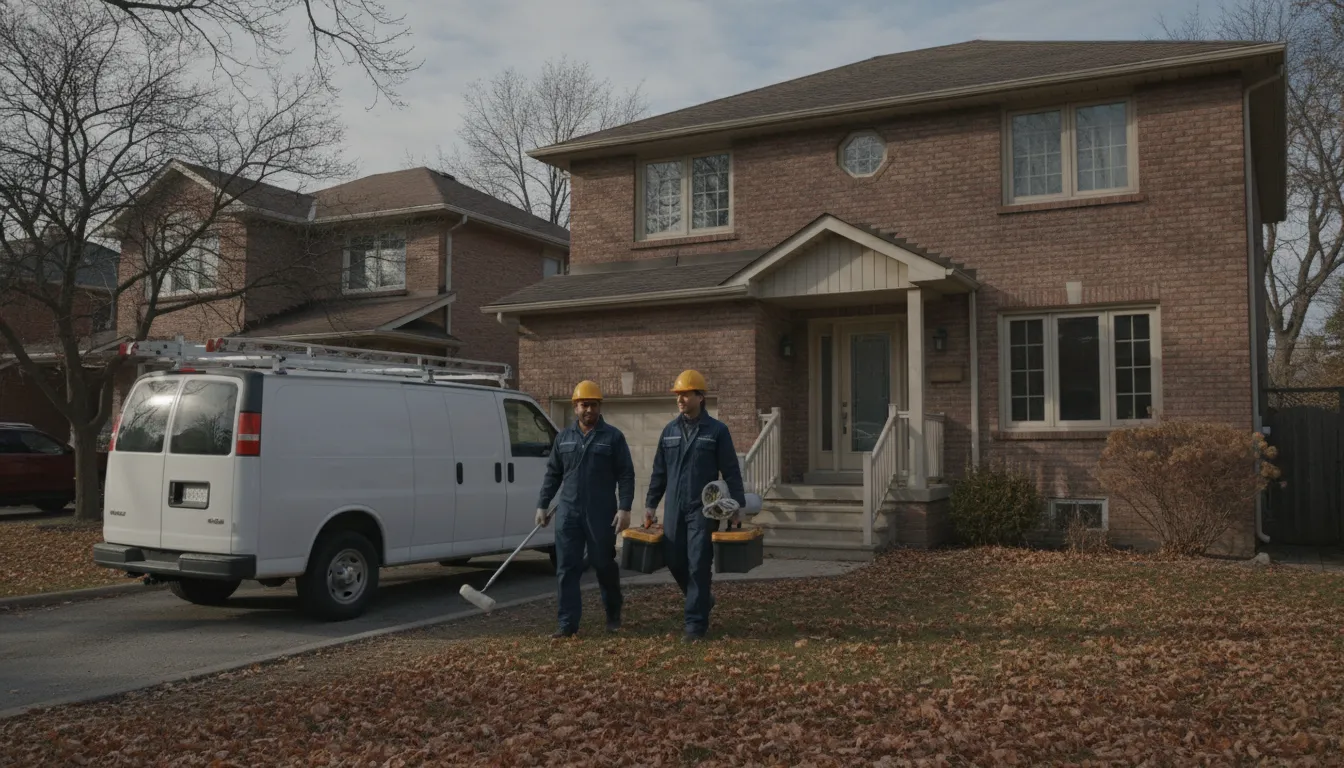
Commercial spaces suffer from scuffs, abrasion, moisture damage and brand-fade. High-traffic corridors, loading docks and busy retail entries take constant impact from carts, deliveries and foot traffic; over time standard interior paints chalk, stain and fail. Exterior façades and metal doors corrode from winter salt and summer humidity, causing flaking and substrate damage that look unprofessional and invite more costly repairs later.
How Best Painters Toronto fixes it
We remove failing coatings with controlled abrasion or chemical strippers where appropriate, treat substrate problems—rust converters on metal, cementitious patching on masonry, tannin-blocking primers on wood—and install commercial-grade paint systems chosen for the exposure. For interiors we favour scuff-resistant semi-gloss or commercial eggshell alkyds on trim and high-abrasion polyamide-epoxy topcoats for corridors and stairwells. Work is scheduled in phases and during agreed windows; we use dust containment, plastic sheeting, and low-odor formulations so your business can keep operating with minimal downtime.
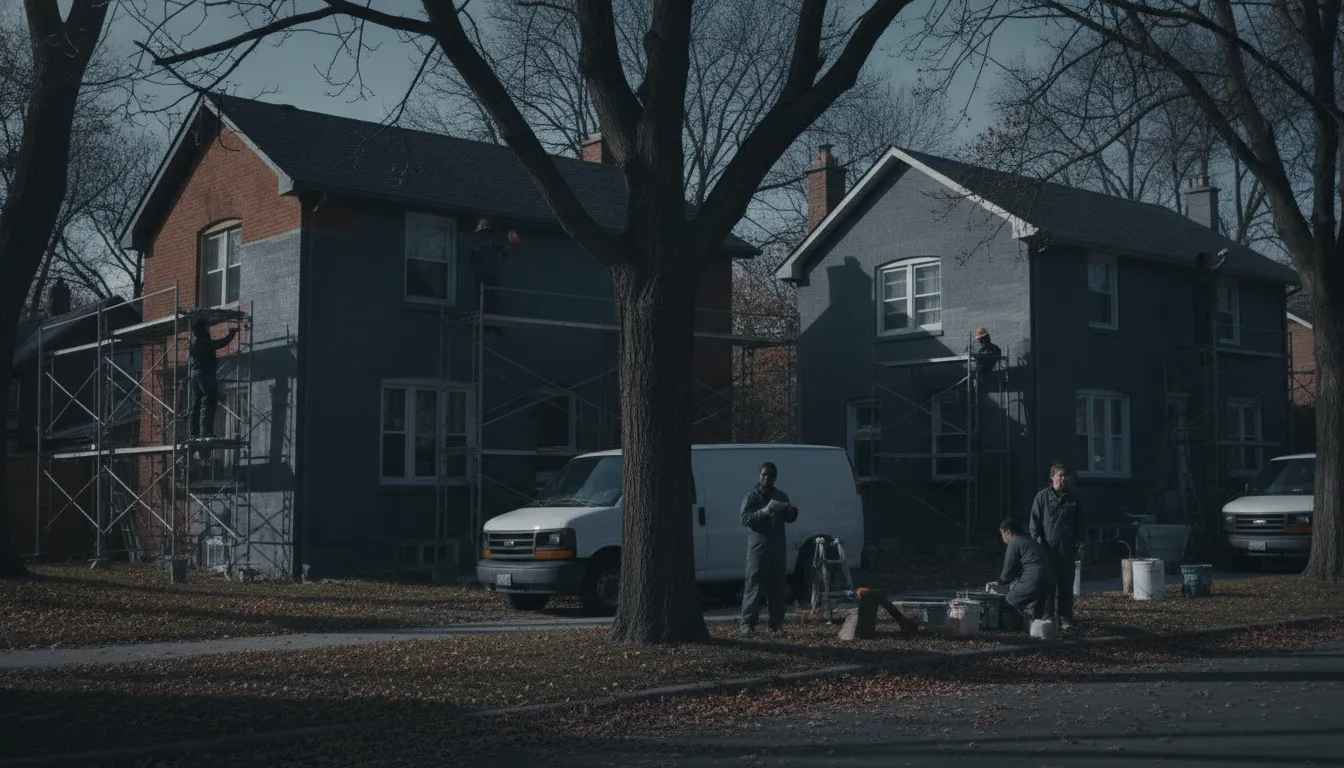
Request a no-obligation commercial assessment by email — we’ll work around your hours
Email Us for a Free Estimate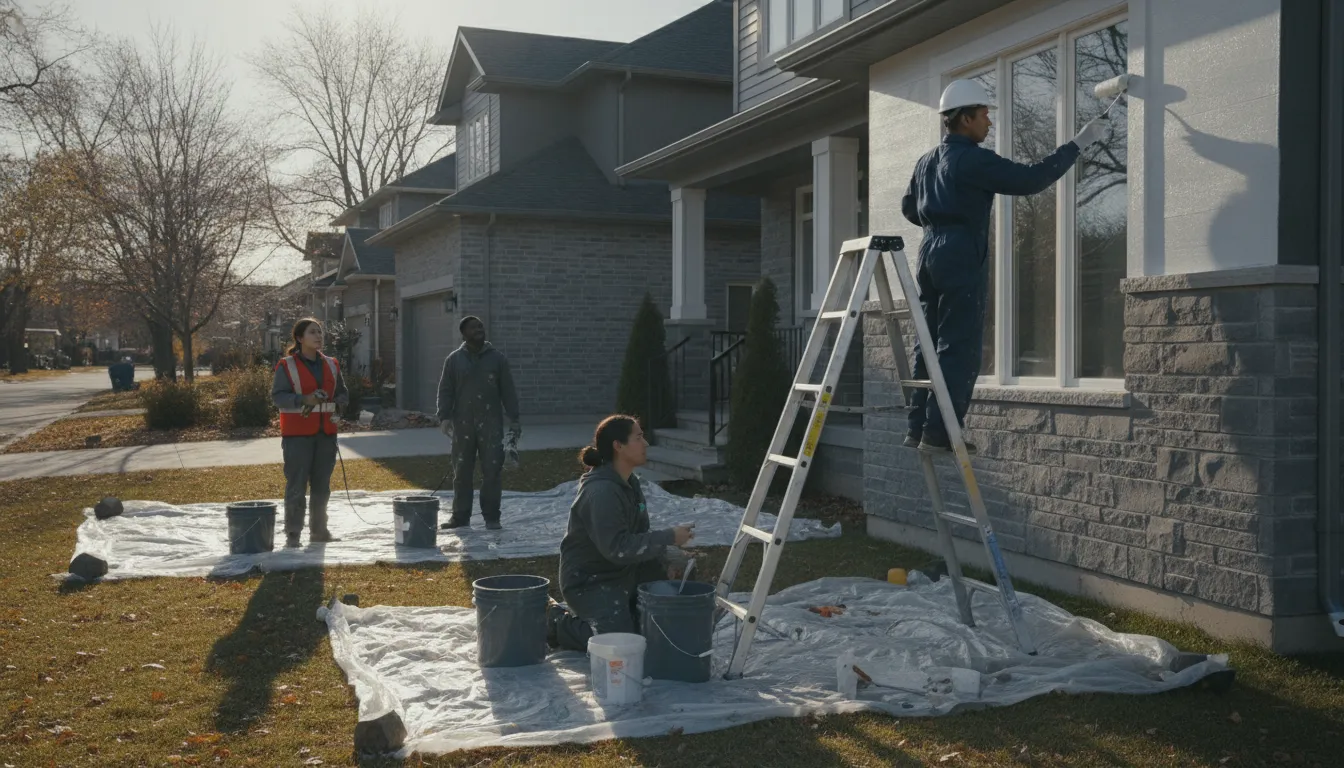
Commercial Painting in Toronto
Best Painters Toronto handles Commercial Painting across Toronto with practical solutions for offices, retail spaces and multi-unit buildings. Toronto’s mix of older masonry storefronts and modern office fit-outs means the right paint, primer and prep vary block by block. We focus on scuff resistance, fast turnaround and preserving business hours so operations keep moving. Below are common scopes, signs to act now, cost drivers and why local knowledge matters.
What this service covers
Commercial Painting covers interior and exterior work for offices, retail, restaurants, condos and mixed-use storefronts. That means surface preparation (sanding, scraping, filler, joint compound), priming with high-adhesion primers and topcoats in alkyd or high-performance acrylics suitable for the substrate. We include door and metal touch-up, trim, baseboards, and selective protective coating on high-traffic surfaces. For exteriors we handle masonry and metal with proper elastomeric or masonry breathable paints and corrosion-resistant metal primers.
When painting is needed now vs when a quick touch-up will do
Act now if you see widespread peeling, chalking, hairline cracks in paint film, rust streaks from metal flashings, or persistent staining in ceilings from water damage. These are failure mechanisms that often mean the substrate or flashings need repair before a cosmetic job. A quick touch-up can work for small scuffs, single-panel damage or fresh marks, but it won’t stop underlying adhesion or moisture problems. Addressing the root cause first saves money over time and prevents repeat cycles of rework.
Why early action saves money
Fixing a few spots early requires basic prep and spot-priming; delaying lets moisture, salt and freeze–thaw cycles work on the substrate and increases labour for full removals and patching. Early painting preserves finishes and reduces the need for epoxy primers, full substrate replacement, or scaffold-level intervention. That keeps downtime low for tenants and reduces capital outlay over the building life-cycle. In Toronto’s climate, seasonal stress accelerates degradation if left unattended.
Why local conditions matter in Toronto
Toronto’s mix of humid summers and freeze–thaw winters changes product choice and timing: breathable masonry coatings for salt-laden winter runoff, mildew-resistant interior paints for humid summers, and cold-tolerant primers for early spring or late fall work. Building stock ranges from century-old brick storefronts in the Beaches and Leslieville to glazed curtain-wall offices in the financial district, plus multi-unit condos across North York. Best Painters Toronto adjusts prep, primer and topcoat selection based on the neighbourhood and substrate to ensure a durable finish.
Why Choose Best Painters Toronto for Commercial Painting
A practical crew that treats a commercial job like a site foreman would. We write clear scopes and show trade-offs so you know what you’re buying.
Transparent written quotes
We provide written scopes that list materials, surface prep and exclusions so you can compare like for like. The quote shows the primer and topcoat types and the expected number of coats.
No hidden fees
Our quotes separate labour, materials and access equipment so you won’t see surprise surcharges later. If unforeseen issues come up we document them and issue an adjusted written change order before proceeding.
Cleanup commitment
We protect flooring, furniture and fixtures with drop cloths, surface masking and dust barriers, and we remove paint residue and tape at the end of each shift. Leave the site as tidy as when we arrived—tools accounted for, debris bagged.
Local crew and knowledge
Our crews know Toronto’s neighbourhoods, building types and seasonal windows for painting. That local familiarity shortens mobilisation and helps avoid weather-related delays in summer and shoulder seasons.
Workmanship guarantee
We back our workmanship with a clear guarantee on labour and application methods stated in the contract. If a defect related to our application shows up under normal use we come back to inspect and address it promptly.
Clear communication
Project managers send photos, daily notes and an agreed schedule by email so facility managers are informed without interruptions. We coordinate access, keys and after-hours work in writing to reduce surprises.
Signs You Need Commercial Painting in Toronto
Spotting the early signs saves time and keeps your operation running. These are the common symptoms and what they usually mean underneath.
Peeling or flaking paint
Large areas where paint detaches indicate poor adhesion or trapped moisture at the substrate. That usually means the surface needs full removal or a breathable system, not a simple touch-up.
Chalking or powdery finish
A dusty film on exterior walls shows paint breakdown from UV and weathering. Chalking signals the need for proper cleaning, primer and a high-performance topcoat to restore protection.
Frequent scuffs in corridors
Scuff marks along baseboards and corridors mean the finish isn’t durable enough for traffic levels. Upgrading to a commercial-grade eggshell or semi-gloss with higher scrub and abrasion resistance is the right fix.
Stains or discolouration on ceilings
Yellowing or water stains point to past leaks, plumbing or roof issues; painting over stains without fixing the leak leads to recurrence. The right approach is repair, stain-blocking primer, then finish coats.
Rust streaks on metal trim
Rust indicates corrosion at metal flashings or fasteners and needs metal cleaning and a corrosion-inhibiting primer. Topcoating without treating rust will lead to return corrosion and failure.
Paint bubbling or blistering
Blisters show trapped moisture or heat expansion beneath the film, often from improper substrate prep or inadequate drying times. Remove the blistered film, correct the source, and use compatible primers and coatings.
Faded brand colours
If corporate colours have faded unevenly, a colour-corrective repaint with a spectrophotometer-matched formula is needed. Choosing durable pigments and UV-stable topcoats prevents rapid fading.
Mould or mildew in humid areas
Black or green growth on paint indicates moisture and inadequate ventilation; it requires cleaning with antimicrobial treatment and mildew-resistant paint. Without addressing humidity or ventilation the problem will return.
How much does Commercial Painting cost in Toronto?
How much does Commercial Painting cost in Toronto?
Cost depends on scope and clear factors: total square metres to be painted, the substrate (drywall, concrete block, brick, metal), the condition of existing surfaces and repairs required, and the materials you choose (standard acrylic vs high-build elastomeric or epoxy floor coatings). Access and complexity—scaffold, swing stage, boom lift, after-hours work—also affect price, as does timing in the season. Best Painters Toronto provides a site assessment and a written quote that lists materials, labour and access costs so you can compare options before committing.
Is my budget aligned with the true scope?
Start by matching your budget to the scope: spot repairs and touch-ups require smaller spend than full-system repaints with substrate repairs. If your goal is cosmetic freshening for low-traffic areas, a touch-up with stain-blocking primer can be the right, cheaper choice.
When should we schedule around business hours?
Decide which areas can close while we work and which need after-hours or phased work to avoid disruption. Some clients plan corridor or suite work overnight with a night crew; others prefer daytime with containment and reduced noise methods.
Repair vs replace—what’s needed?
Look for damp plaster, soft lumber, rusted metal or delaminated coatings; these indicate repairs rather than paint alone. If you have active leaks or structural decay, solve that first—painting over unresolved damage is wasted money.
Which materials suit my space?
Select finishes by use: low-sheen, high-scrub paints for corridors; epoxy or urethane floor coatings for loading bays; elastomeric masonry paints for porous brick exteriors. Cheaper wall paints work for private offices but won’t hold up in high-traffic retail frontages.
How much disruption can we tolerate?
Decide whether phased suites, weekend work or temporary partitions are acceptable to keep operations moving. Minimal downtime often costs more but saves lost revenue—factor that into your budget decision.
Permits and code considerations
Check with property management if permits or fire-stopping documentation is required for exterior access or where scaffold touches fire separations. Smaller interior repaints rarely need permits, but exterior scaffold and certain condo common-area work may require notice or approvals.
How much does Commercial Painting cost in Toronto?
Cost depends on scope and clear factors: total square metres to be painted, the substrate (drywall, concrete block, brick, metal), the condition of existing surfaces and repairs required, and the materials you choose (standard acrylic vs high-build elastomeric or epoxy floor coatings). Access and complexity—scaffold, swing stage, boom lift, after-hours work—also affect price, as does timing in the season. Best Painters Toronto provides a site assessment and a written quote that lists materials, labour and access costs so you can compare options before committing.
What is a typical timeline for a commercial repaint?
Timelines vary with size and access: small retail units can be done in days while multi-floor office fit-outs take weeks. Prep is often the longest part—repairs, rust remediation and primer cure times determine when topcoats can go on. We provide a schedule in the written scope and update it by email when weather or access changes affect the plan.
Which paint types do you recommend for high-traffic areas?
For corridors and retail areas we recommend commercial-grade acrylics with high scrub and abrasion resistance or urethane-modified finishes for extra toughness. For floors and service areas epoxy or polyaspartic coatings provide abrasion and chemical resistance. For exteriors choose breathable masonry systems or elastomeric membranes where movement and cracking are a concern.
Do I need permits or inspections for exterior work in Toronto?
Small exterior repaints rarely need municipal permits, but scaffold, sidewalk closures or work that touches public right-of-way often requires permits and public-protection measures. Condo common-area projects may need board approval and proof of insurance. We coordinate these requirements with building managers and the city when necessary.
What kind of warranty or guarantee do you provide?
We provide a workmanship guarantee covering proper application and labour as described in the contract; the length and scope are written in the quote. Product manufacturers offer separate warranties for paint products—those remain in effect and we document the exact products used and batch numbers in the project record.
How should we prepare our space before painting begins?
Remove loose items and fragile goods from the area and advise tenants about access and temporary closures outlined in the schedule. We handle large furniture moves on request and protect immovable items with masking and containment. For exterior work clear walkways and make sure building management has arranged any necessary access permissions.
Why do quotes differ between contractors?
Quotes differ because contractors specify different prep standards, materials and access assumptions; one quote might include full sanding and scarifying while another assumes spot-priming. Labour rates, warranty coverage and how change orders are handled also vary. Compare written scopes line-by-line—look at primer types, number of coats, access equipment and exclusions—not just the total price.
Our Commercial Painting Process in Toronto
A clear, step-by-step approach keeps projects on schedule and avoids surprises. We document everything and communicate by email so your facilities team can plan.
- 1
Site assessment and diagnostics
We inspect substrates, measure areas and test adhesion where necessary. Photos and a written defect log identify repairs such as plaster patching, rust treatment or flashing replacement.
- 2
Detailed written scope and quote
The quote lists primer and topcoat systems, number of coats, access needs and a line-item for repairs. Approvals and change-order protocols are agreed by email before work begins.
- 3
Scheduling and permits
We coordinate timing with building managers and apply for any required municipal permits in Toronto when scaffold or public right-of-way access is needed. Work windows are chosen to avoid peak weather risks and business peaks.
- 4
Surface prep and protection
Prep uses mechanical sanding, pressure washing for exteriors, or dry abrasive methods for metal. We protect floors, HVAC returns and fixtures with masking, dropcloths and containment barriers to prevent dust and overspray.
- 5
Application and quality control
We use recommended application methods—roller and brush for smooth control in interiors, airless spray for uniform coverage on large walls, and brush/knife for trim. Each coat is inspected for coverage, adhesion and film build; we use wet film gauges and back-check adhesion as needed.
- 6
Final walkthrough and documentation
We complete a final walkthrough with your manager, log punch-list items and provide a written record of products used and maintenance notes. Photographs of completed areas and the invoice are sent by email for your records.
Professional Commercial Painting Built for Toronto Conditions
Toronto’s climate and building stock create specific demands on paint systems and scheduling. Best Painters Toronto builds specifications around local reality: temperature swings, salt exposure and varied substrates in downtown and inner suburbs. We advise on timing and product selection to reduce callbacks and extend the life of finishes. Below are the technical points every facilities manager should understand.
Ontario climate stresses
Toronto’s humid summers and sub-zero winters put repeated thermal cycling through coatings, leading to cracking and adhesion loss if wrong products are used. Salt from winter road maintenance attacks masonry and metal flashings, so exterior specifications often include breathable masonry primers and alkaline-resistant topcoats. Work staged for spring or fall must account for dew and overnight lows—proper drying time is non-negotiable for durable film formation.
Local building-stock considerations
Toronto ranges from heritage brick storefronts in Queen West to high-rise glass and metal panels in the financial core and mid-century concrete condos in Scarborough and North York. Each substrate needs its own primer and prep method—masonry requires masonry cleaners and patch repair, metal needs rust remediation and corrosion-inhibiting primers, and concrete requires patch repair and pH-neutral primers. Understanding the neighbourhood helps predict typical substrate issues before we start.
Permits, access and condo rules
Many Toronto condo boards and storefronts require advance notice, insurance certificates and specific work-hour windows for painting projects. Exterior scaffold touching sidewalks may require municipal permits and public-protection measures. We handle documentation and coordinate with property managers to keep the job compliant.
Workmanship and maintenance standards
Commercial Painting in Toronto should be specified with clear maintenance guidance: recommended cleaning agents, recoat windows, and touch-up paint storage. We document film thickness, primer types and cure times so facility teams know when normal wear should be expected and when to contact us for warranty work.
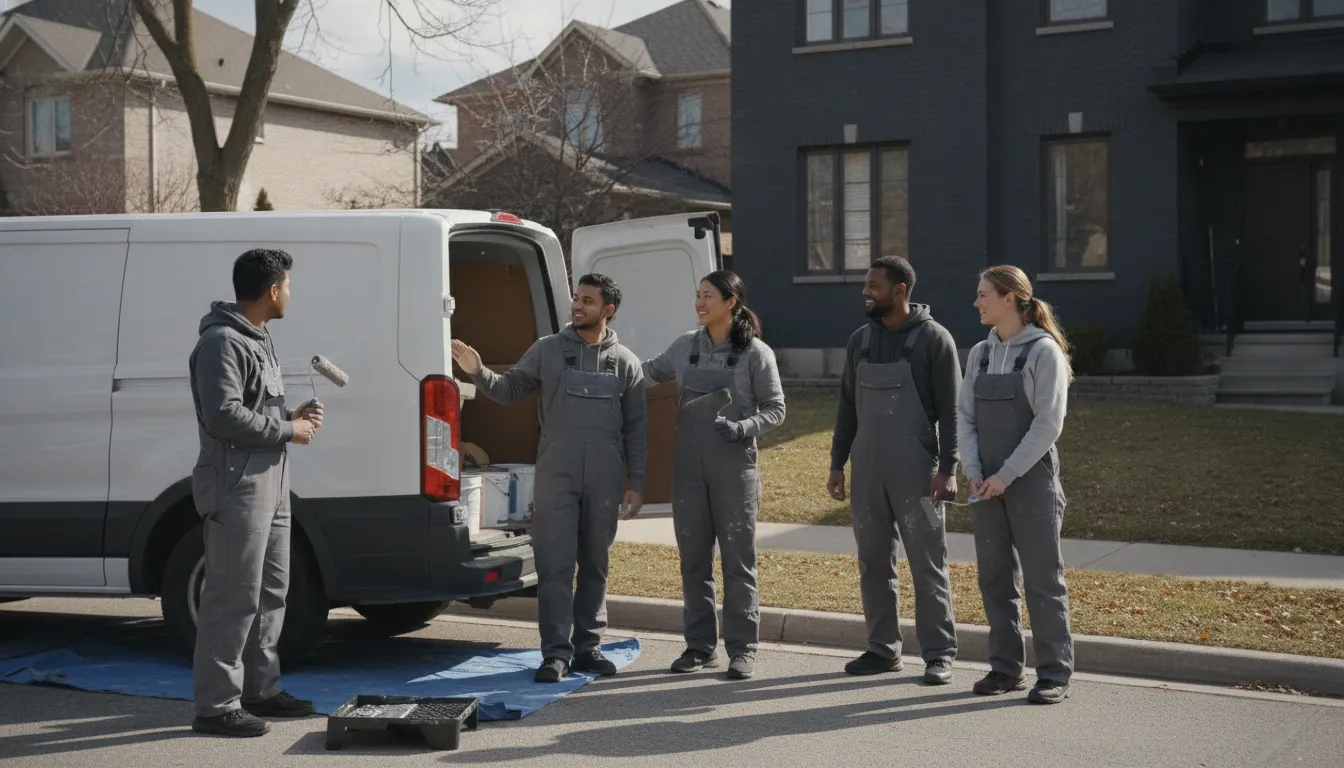
Weather sets your painting window — email us to plan the job.
Fall painting conditions in Toronto, ON
Fall around Toronto, ON offers stable, moderate temperatures that are perfect for exterior painting — getting it done now protects your siding and trim through winter.
Proudly Serving Toronto, ON
Local, on-time service throughout Toronto and the surrounding area.