
Factory-style cabinet respray for a Richmond Hill kitchen
Turned worn maple cabinets into a tough, uniform factory-style lacquer finish without a full rebuild.
- 1
Step 1 — Tear down and inventory
We removed doors, drawers, hinges and hardware and labelled every piece. That lets us ensure proper fit and reassembly. Small parts were bagged and tagged so nothing gets lost during the multi-stage spray process.
- 2
Step 2 — Repair, fill and substrate prep
Dings and gouges were routed and filled with a two-component wood filler compatible with lacquer. Swollen drawer boxes were planed and refitted. We sanded to 180–220 grit to remove the old clearcoat while preserving edge profiles.
- 3
Step 3 — De-grease, prime and sealer
All surfaces were wiped with a low-residue de-greaser then tacked with a lint-free cloth. We applied a shellac-based sealer to block tannin staining from maple, followed by a high-build acrylic primer tailored for lacquer topcoats. This prevents yellowing and gives the topcoat a uniform base.
- 4
Step 4 — Spray application in controlled booth
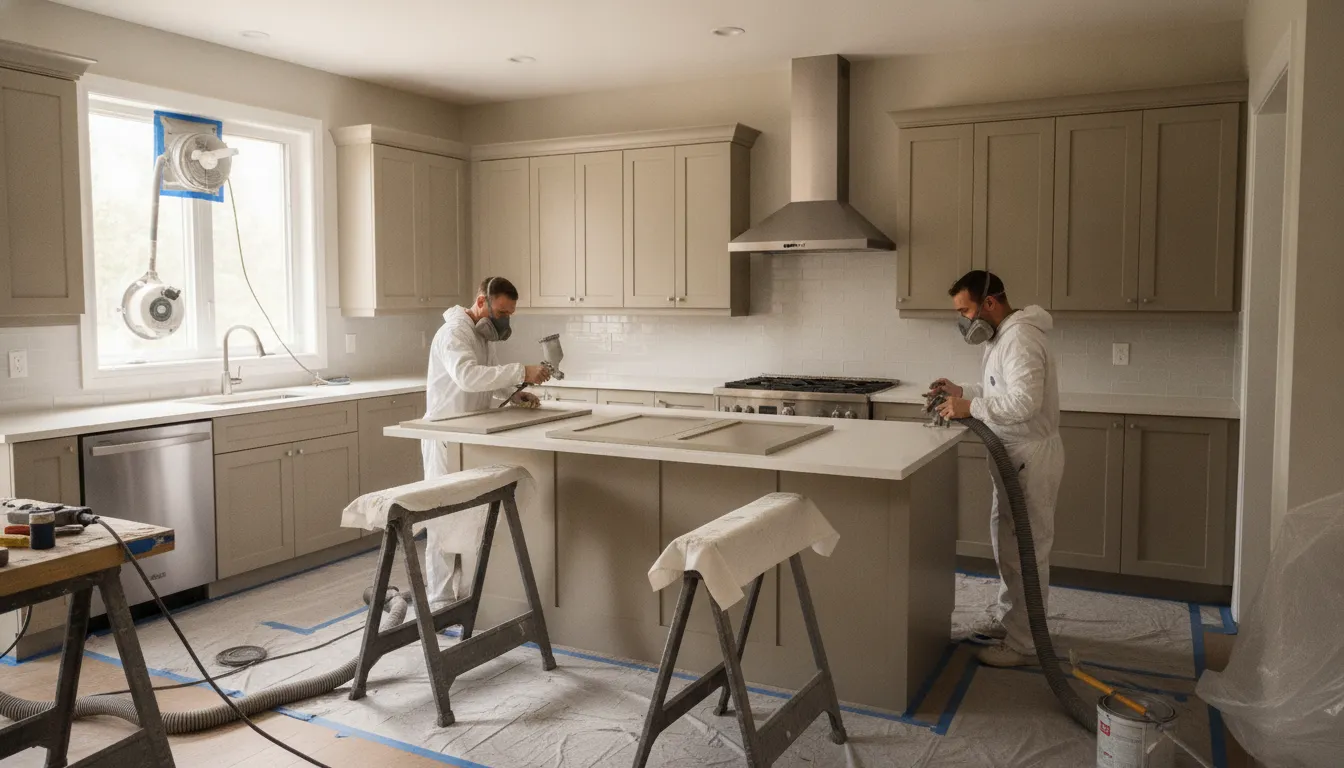
We used a crosslinked nitrocellulose/acrylic lacquer system applied by HVLP spray for the factory look. Each piece got three fine wet coats with full flash time between passes, then a final light sanding and a dry coat for depth. The garage booth had an intake/exhaust fan system and HEPA filtration to protect the open-plan living area.
- 5
Step 5 — Reassembly and seal at site
After a controlled cure period (24–48 hours for surface handling, longer for full hardness), we reinstalled all doors and hardware and adjusted hinges for consistent gaps. We applied a bead of clear, low-profile seam seal on undersides of kickboards where moisture is most likely, and handed over maintenance guidance.
Frequently Asked Questions
How long does a project like this take?
A typical cabinet respray for a mid-size kitchen in Richmond Hill runs about one to two weeks from teardown to reassembly. Time varies with repairs, curing requirements and whether we do an onsite touch-up after acclimation.
How disruptive will it be to live in the house?
We always set up containment and an off-site spray booth when possible; most of the spraying happens outside the home. Expect daily access to other rooms, and we keep work areas tidy. Since we’re in the America/Toronto zone with seasonal humidity swings, we schedule critical spray days for when it's drier for consistent curing.
When is a respray better than replacing doors?
Respray is the practical choice when cabinet boxes are sound and you want the factory look without the cost and waste of new doors. If structural issues, warped boxes, or severe water damage exist, replacement or partial rebuild may be the right call.
Do you use low-VOC products?
We offer low-VOC primers and waterborne lacquers, but for the hardest, most factory-like finishes we sometimes recommend crosslinked systems. We explain trade-offs so homeowners in York Region and neighbouring Markham and Vaughan can decide what suits family priorities.
Want a factory finish for your Richmond Hill kitchen?
We’ll scope your job, send a clear spec and work around your schedule. Email us with photos and we’ll reply with next steps.
Get a Free Quote