
After-hours office repaint in Downtown Toronto
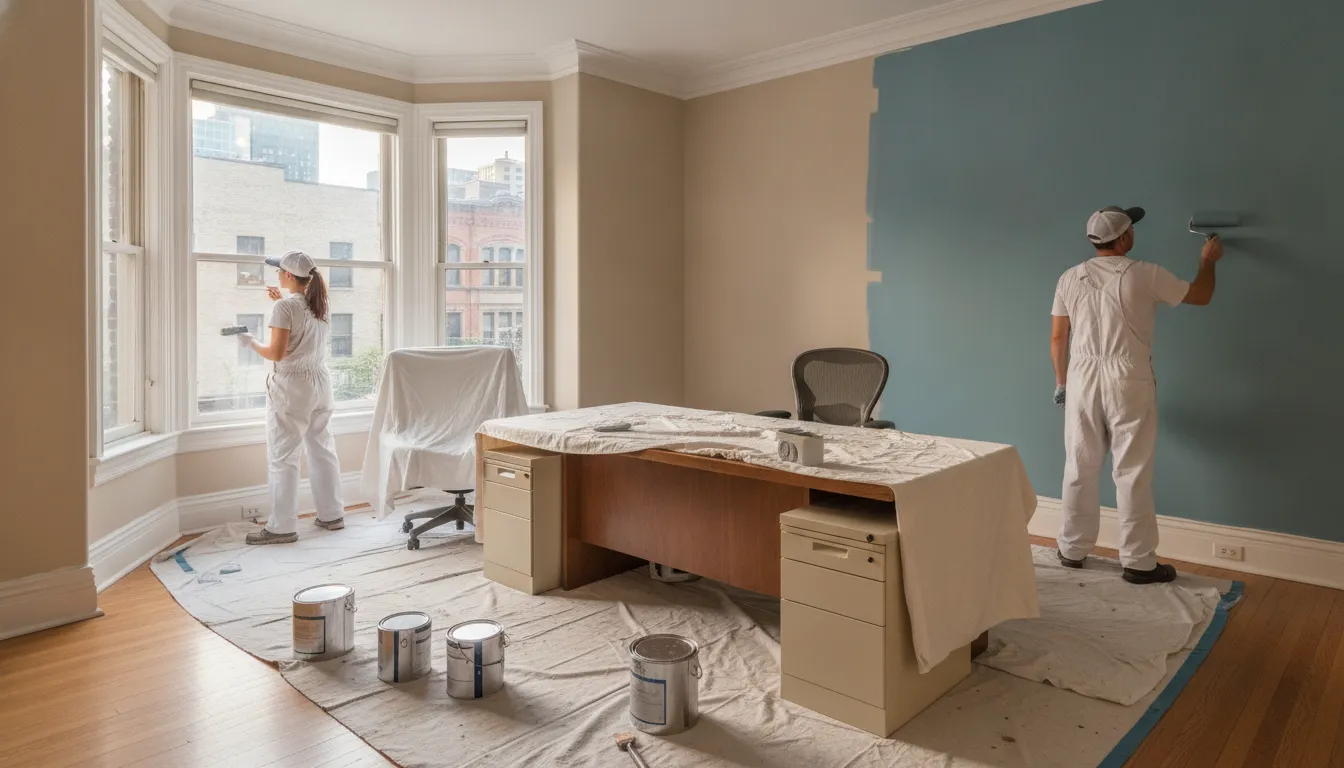
Repainting a busy downtown office overnight to avoid downtime and meet city ventilation and fire-safety expectations.
- 1
Night-shift planning and logistics
We ran a preparatory walk-through with building management to confirm after-hours access, loading-dock windows and elevator reservations. Tools and materials were palletised and labelled; only hand tools and compact airless units were allowed in the freight elevator to comply with building rules.
- 2
Surface prep — the job’s backbone
We mechanically scuffed glossy alkyd trim with 120–150 grit, feathered existing repairs with USG joint compound where needed, and abraded loose paint from concrete block. Grease and deposits were removed with trisodium phosphate (TSP) substitute and rinsed; damp standards were verified with a moisture meter before priming.
- 3
Priming and stain control
Red iron oxide stains and nicotine traces were spot-sealed with an oil-modified blocking primer, while bare gypsum and patched areas received a premium acrylic PVA primer for consistent porosity. We labelled each primer pass and only proceeded after tack tests confirmed adhesion.
- 4
Topcoats chosen for performance
We used a low-VOC, water-based acrylic latex for main walls (matte finish) and a high-performance acrylic enamel (satin) on corridors and trims for washability. Paints were Benjamin Moore Aura-equivalent class or similar commercial-grade products meeting low-odor and high-hide requirements suitable for occupied spaces.
- 5
Ventilation, cleanup and handoff
We ran temporary HEPA-filtered air scrubbers and portable exhaust fans to manage fumes during and after coating. Night crews completed a thorough cleanup, removed all masking, and left a written log of products used, batch numbers, and touch-up tips for facility staff.
Frequently Asked Questions
How long did the project take when working nights?
Typical runs were 8–10 hour overnight shifts over several nights, depending on suite size. Night shifts let us complete coats and allow adequate dry time without disrupting daytime operations.
Will there be fumes and how do you control them?
We use low-VOC water-based paints and run HEPA scrubbers plus spot exhaust to corridor vents when the building allows. That keeps odour low and helps us meet building air-quality expectations in Downtown Toronto and surrounding areas like North York and Etobicoke.
When is an after-hours repaint the right call?
When the tenant must stay operational — call centres, design studios and busy small firms in Downtown Toronto often need overnight work. If you can’t vacate departments for a weekend, staged after-hours work is the practical alternative.
Do you handle approvals with building management?
Yes. We coordinate security, elevator reservations and any fire-safety or HVAC restrictions with property management so our crews meet rules and local code considerations without surprises.
Need an after-hours repaint in Downtown Toronto?
We plan for access, ventilation and a clean restart every morning. Email us with the suite size and building rules and we’ll respond with a clear plan.
Get a Free Quote