
Staircase and railing refinishing in Clarington
Bring back a worn two‑storey stair and tired railing with durable finishes and practical access work.
- 1
Step 1 — Survey and material plan
We inspected every tread, riser, spindle and newel. We identified species (pine treads with hardwood nosing) and mapped repairs. Specified materials up front: 3M Pro Grade sandpaper, Festool sanders for dust extraction, Benjamin Moore Advance alkyd‑style waterborne for woodwork, and a two‑component conversion varnish only for the treads where needed.
- 2
Step 2 — Containment and masking
We built a containment zone with HVAC‑safe zip walls and HEPA air scrubbers to protect the rest of the house and the toddler. All floors were covered with rosin paper and corner guards; trim and adjacent walls were masked with low‑tack painter’s tape to avoid damage.
- 3
Step 3 — Prep: sanding, epoxy fills and degloss
Using a Festool RO for flats and hand detail with 120–180 grit, we removed loose finishes and feathered edges. Gouges and old screw holes were filled with a two‑part epoxy wood filler, cured, then sanded flush. We wiped with TSP substitute to remove grease and allowed recommended dwell time before priming.
- 4
Step 4 — Priming and colour coat
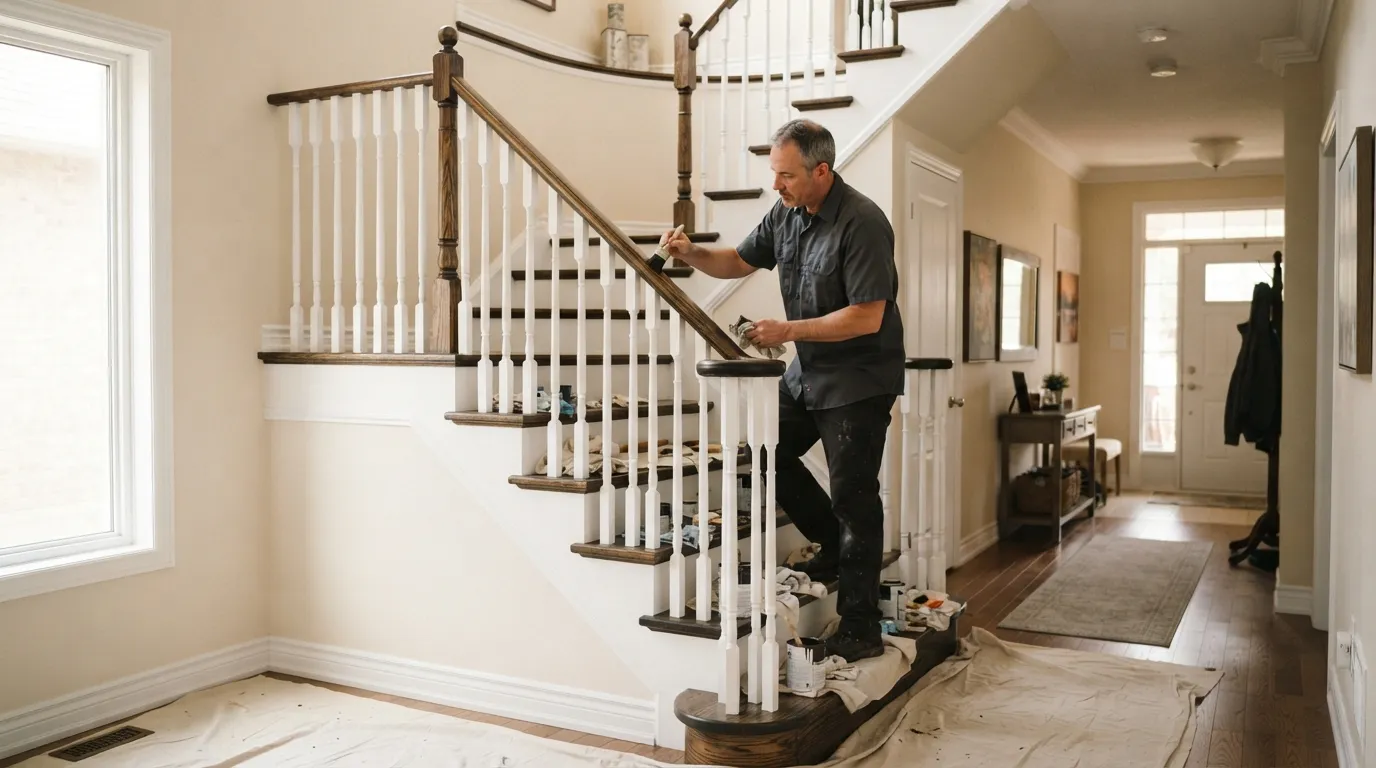
For painted risers and spindles we used Benjamin Moore Fresh Start primer for adhesion, then two coats of BM Advance in an eggshell for wear and easy cleaning. Waterborne alkyd gives that traditional alkyd feel with lower VOCs — helpful in a season when Clarington evenings are cool and can slow cure.
- 5
Step 5 — Tread protection and topcoat
Treads received a conversion varnish finish on sanding‑prepared hardwood nosings for maximum abrasion resistance. We applied three thin coats with 12–16 hour flash between coats (longer overnight in cooler weather), sanding lightly with 320 grit between coats. Final cure was discussed with the homeowner — full hardness develops over weeks, so we left protective runners.
Frequently Asked Questions
How long does a job like this take?
Typical timeline is two to four days of on‑site work for a standard two‑storey stair: prep and repairs, primer and paint coats, then topcoat applications with appropriate dry time. Cooler weather in Clarington can extend flash and cure time, so we build that into the schedule.
How much disruption should I expect inside the house?
We set up a contained work area with HEPA extraction to keep dust down. Expect restricted access near the stair for safety while varnish cures; we recommend using alternate routes inside the home and keeping pets and small children out of the zone.
When should I refinish stairs instead of replacing them?
If treads are structurally sound and wear is cosmetic or surface‑deep, refinishing is the smart, lower‑waste choice. Replace only when there’s rot, major structural damage or you want a completely different stair geometry.
Can you use low‑VOC products in colder months?
Yes — waterborne alkyds and low‑VOC conversion finishes are available, but cooler winter or spring nights around Clarington and neighbouring Oshawa can slow cure. We plan coat timing and use heaters or humidifiers only when safe and code‑compliant to help meet cure windows.
Ready to fix that stair in your Clarington home?
We work across Clarington, County of Durham and nearby Oshawa and Bowmanville areas. Email us to set up an inspection — we reply by email with a clear plan.
Get a Free Quote